
A CV/résumé is one of the most important documents in any application.
However, while an academic CV shows your journey, an industry résumé proves your usefulness.

Understanding this shift is the single most important step to writing a strong industry CV.
The Essence of an Industry Résumé
A résumé or industry CV has one job only:
To prove that your experience matches the specific job requirements.
Not to document everything you’ve ever done.
Not to showcase your full academic identity.
Not to demonstrate brilliance or curiosity.
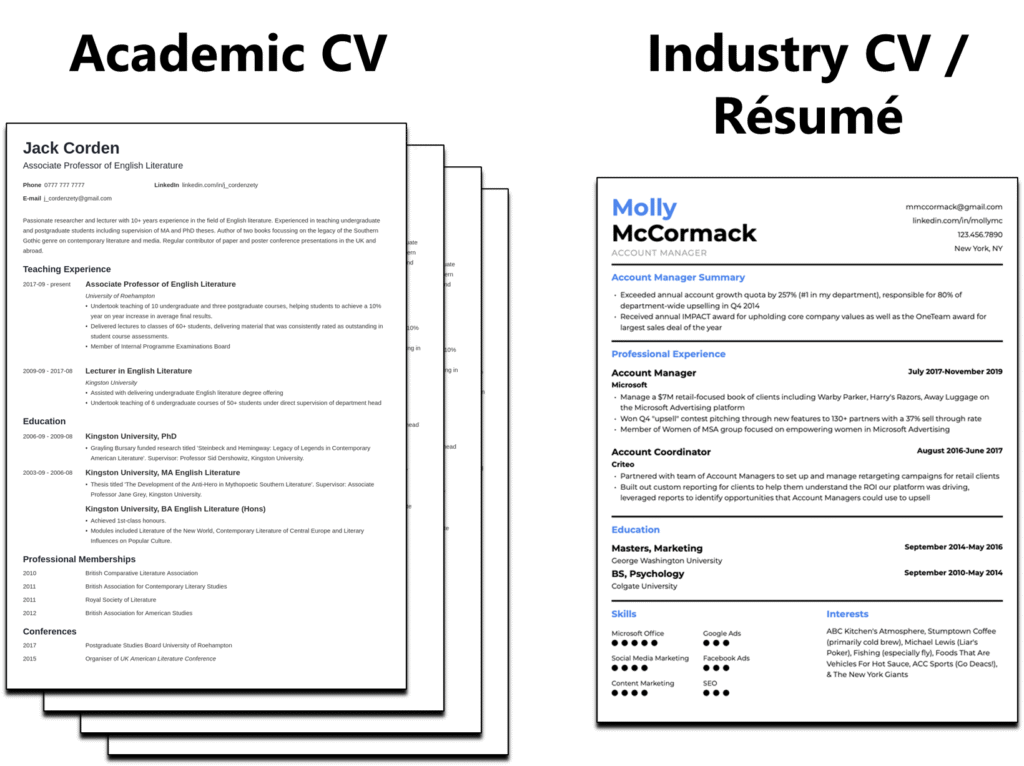
It exists to reduce risk for the employer by showing that you can perform this role reliably, efficiently, and with minimal hand-holding.
> If an academic CV answers “How impressive is this scientist?”, a résumé/industry CV answers “Can this person do the job reliably?”
The difference reflects two very different systems:
Academia seeks potential to create new opportunities.
Industry seeks execution of a defined need and rewards reliable outcomes.
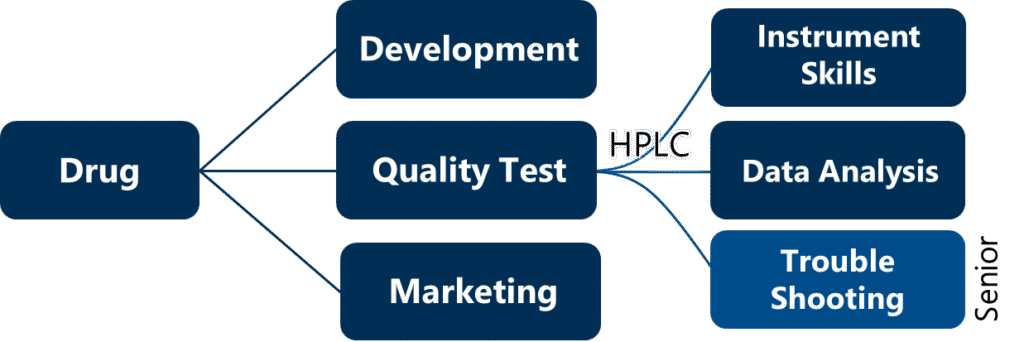
Your résumé must therefore shift from recording your path to proving your relevance.
The Psychology Behind Résumés
In industry, your résumé is not generally read by someone searching for brilliance, sometimes not even by someone whom you will ever work with.
Often, your first reader is:
- Human Resources personnel
- Automated screening software
- A recruiter
Recruiters typically scan it for 5–15 seconds in the first round (and only between 30 seconds to 2 minutes in the second) to answer one question:
“Does this person fit the requirements?”
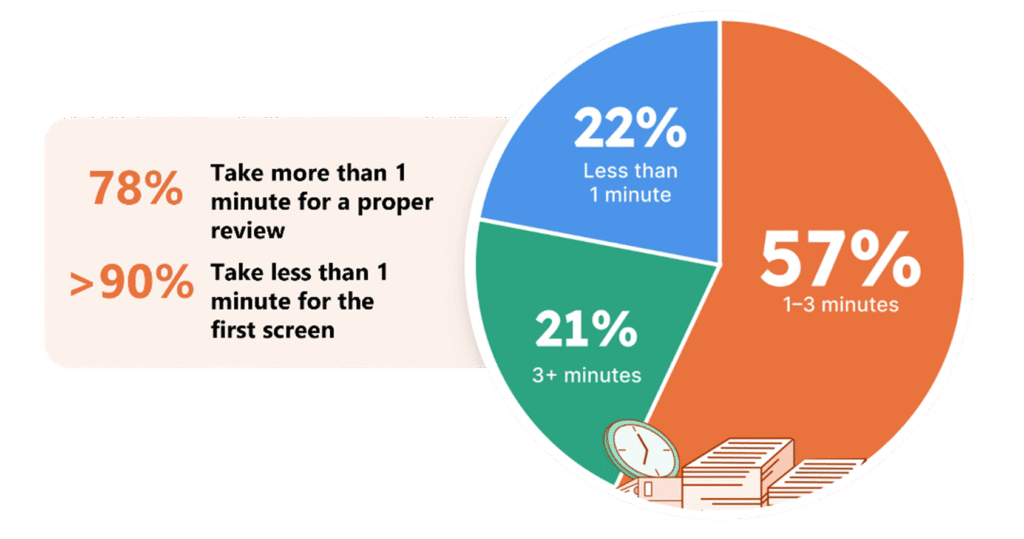
This is why clarity, relevance, and speed of comprehension matter the most.
How To Write An Industry Résumé
A strong résumé should:
- Allow instant assessment of fit
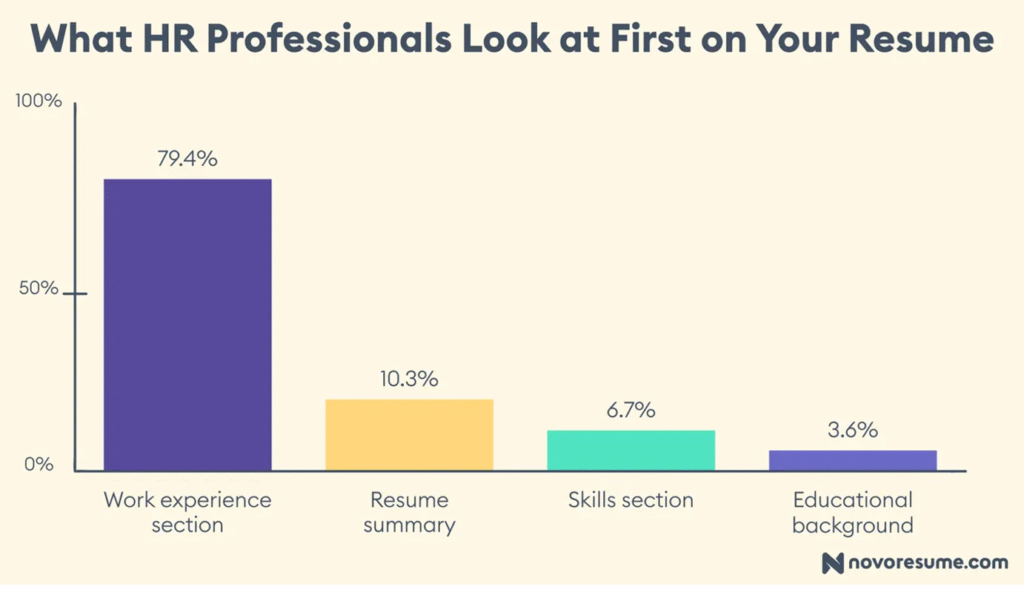
- Highlight experiences and results (not education)
- Remove anything not directly relevant
In contrast to an academic CV, here, including too much is just as harmful as including too little.
Sections to Include:
There is no absolute right or wrong.
For example, in which order you present your headlines is still debated and often dependent on the subjective preferences of your reviewer. However, here is what we would suggest:
Personal & Contact Information
Include: Full name | Professional email | Phone number | City & country | LinkedIn (plus Google Scholar / ORCID if research-relevant)
Optional: Visa or work status
Exclude: Date of birth | Gender | Marital status | Photo (unless requested e.g., in EU)
Professional Summary
Debated whether to include, especially when a separate cover letter is requested.
Goal: Instant positioning
4–5 short sentences that answer “Who are you professionally?”, “What are your key skills?”, “Why this role and company?”
Objective Statement
Debated whether to include, especially when a separate cover letter is requested.
It focuses on your career direction and motivation. Clearly state in 2-3 sentences the type of role you are seeking, what you aim to contribute, and how this position aligns with your professional goals.
Relevant Work Experience
The goal is to prove you solved similar problems before.
Therefore, include: What you did | For how long | The result (e.g., profit generated)
Example:
“2 years of experience in flow cytometry using 30+ fluorophore panels, contributing to a diagnostic workflow for colon cancer detection used in large clinics.”
> Numbers create credibility. Context creates meaning.
Skills & Competencies
Here you want to show applied, relevant capability. However, only list skills that match the job description and that you can concretely support.
Instead of vague claims like “Leadership”, write: “Led a team of 7 scientists developing an organ-on-a-chip model within 2 years, now implemented in XYZ startup workflows.”
Education
This section should only provide background, therefore only include your latest degrees (i.e., no school if received a university degree), relevant achievements
Example:
Master of Science – Biotechnology (GPA 4.0)
Developed a photoluminescence assay detecting pg-level proteins
2019 – 2021
Bachelor of Science – Biochemistry (GPA 3.7)
2016 – 2019
Additional Sections
Here, you list Patents, Honors, Certifications or relevant Publications. However, only include if they are directly relevant for the position and strengthen your perception.
Final Note: Length & Structure
- Aim for 1 page
- Extend to 2 only with significant experience
- Only include what is relevant, not what you are proud of
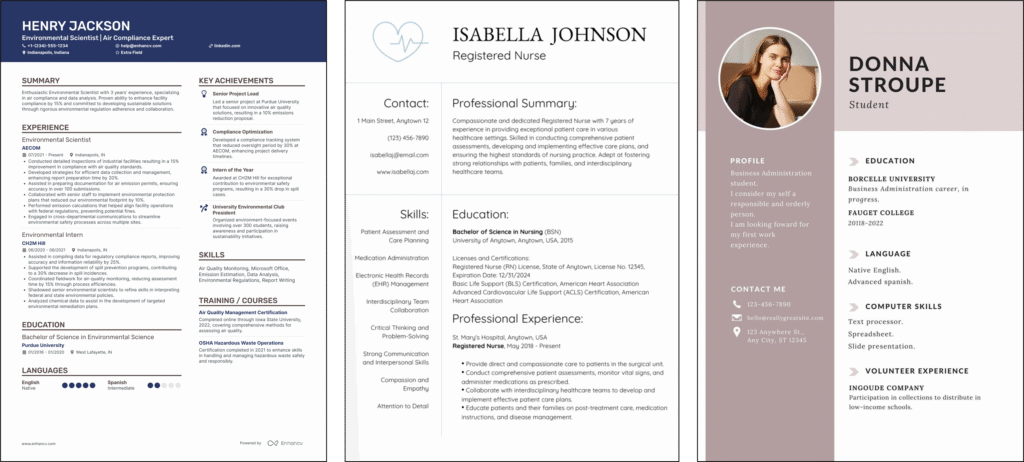
Your résumé should be skimmable and convincing.
Design: Focus on Functionality
Three principles define strong visual design:
1. Clear Structure
Your résumé should guide the reader’s eye quickly and intuitively. Clear headings, a logical order, and an easily scannable layout allow key information to be found within seconds.
2. Simplicity
Skip visual gimmicks such as skill bars or rating circles to reduce cognitive load and improve machine readability. Too simple is better than too overwhelming.
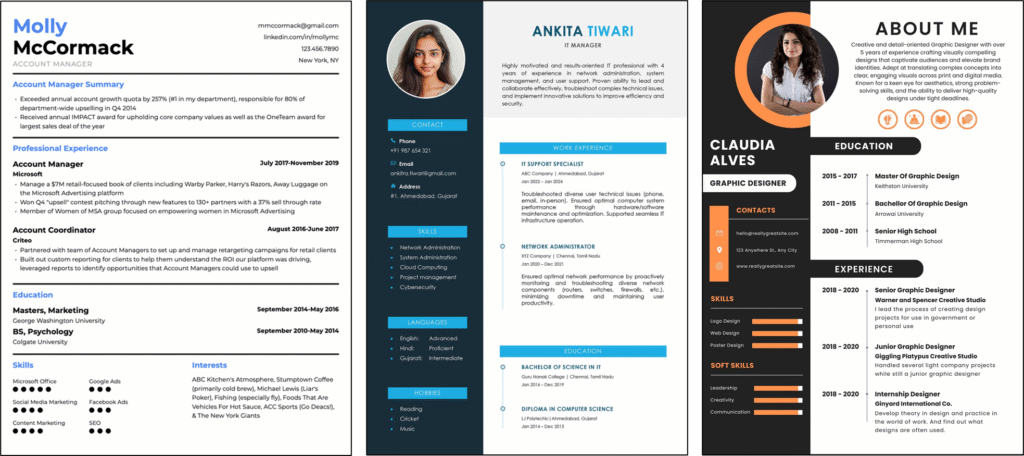
3. Selective Beauty
You can add small, thoughtful design touches that don’t distracting from the content. Subtle color accents, clean spacing, and well-matched fonts can make a résumé more inviting and engaging.
Our Design Guide
Use one (max two) fonts, preferably without serifs, limiting to 3 font sizes, main color black (with blue tones for design), Simple from top to down and left to right design or maximum two columns. Finally, use templates since designing from scratch is harder than it seems.
A Personal Tip
Writing a résumé feels exposing. You strip your professional self down to a few lines of focused information while ignoring everything else.
That discomfort is normal. Don’t let it drive you crazy.
But remember that a résumé isn’t a judgment of your worth. It’s a tool to communicate clearly.
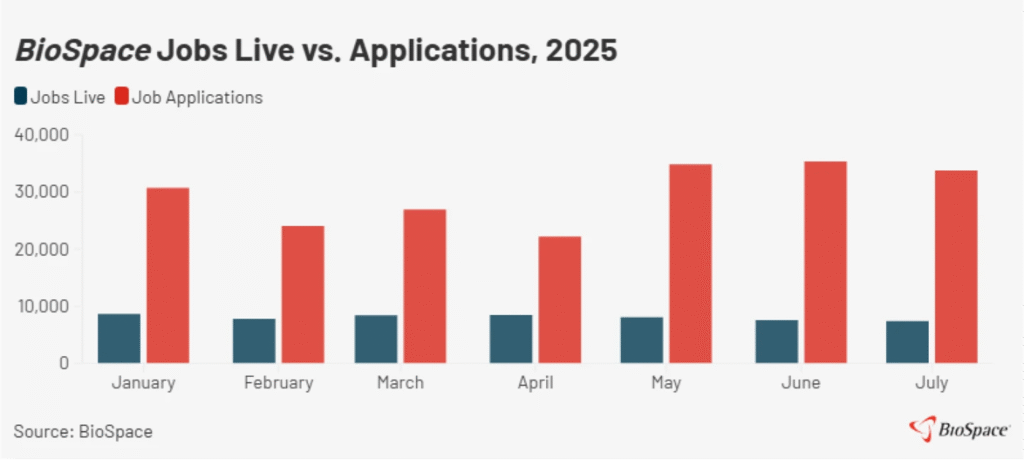
Therefore, especially as a junior, honesty builds more trust than inflated claims.
Including irrelevant achievements signals you haven’t understood the role. A marketing employer does not care about your publication history.
Tailor every résumé to the job description. Review what gets responses and iterate. Try to get feedback from senior/hiring peers.
In Essence
A strong industry résumé is not a complete record of who you are. It is a strategic document that answers one question clearly and quickly:
Can this person do the work that solves our problem?
If you found the above inspiring, join our weekly educational series.
Each week, I (Patrick) write one piece on topics such as:
- How to find your dream position
- How to put together your application documents
- How to succeed in your job
You can sign up right here: https://forms.gle/pCZLX7cF3XTQ2G6C9
It will help you stay engaged and learn in depth what will contribute to your success.
Leave a Reply